
In today’s fast-paced corporate landscape, delivery route optimisation is no longer just a trending buzzword; it is an absolute necessity for any business managing its own fleet of vehicles. Implementing intelligent logistics solutions yields monumental savings in time, fuel, and human resources. At SolutionsInc, we constantly strive to push the boundaries of what enterprise software can achieve. Today, we are absolutely thrilled to announce a ground-breaking new feature seamlessly integrated into our flagship product, SolutionsERP, which is proudly built upon the robust, open-source ERPNext framework.
Rather than relying on expensive, restrictive commercial APIs provided by tech giants, our team has engineered a powerful technology stack that gives your business complete sovereignty over its data. In this comprehensive article, we will delve into the technical and practical brilliance of this new feature, explaining why we integrated a self-hosted OpenRouteService and the Vroom engine, and why we strongly advocate for Organic Maps navigation as the ultimate tool for your drivers.
The Architecture: Why a Self-Hosted OpenRouteService is a Game Changer
When adding logistics modules, the vast majority of standard ERP systems take the path of least resistance: they integrate with commercial mapping services. The fundamental flaw in this approach is that as your operations scale, the costs associated with external API queries grow exponentially. At SolutionsInc, we approached this challenge with an engineering mindset designed to delight system administrators and finance directors alike.
The bedrock of our new functionality is a self-hosted OpenRouteService (ORS) coupled with the Vroom (Vehicle Routing Open-Source Optimization Machine) engine. OpenRouteService is a highly capable open-source software written in Java, utilising free OpenStreetMap (OSM) data. By leveraging this within SolutionsERP—powered by the exceptional flexibility of ERPNext—your company can run the entire routing engine on your own infrastructure, such as a dedicated Debian or Ubuntu server.
What are the core advantages of this architectural decision?
- Zero Query Limits: When you run a self-hosted OpenRouteService, your only limitation is the computational power (CPU and RAM) of your own hardware. Continuous delivery route optimisation can run 24/7 without the anxiety of receiving a massive monthly invoice for API calls.
- Absolute Data Privacy: Customer addresses (Leads, Customers, Addresses) never leave your corporate infrastructure. From a cybersecurity and GDPR compliance perspective, this is a massive operational advantage.
- Lightning-Fast Performance: Locating the ORS server within the same local network or data centre as your SolutionsERP instance guarantees ultra-low latency and immediate algorithmic responses.
- Advanced Optimisation via Vroom: Vroom is an algorithm tailor-made for resolving the Vehicle Routing Problem (VRP). It can process dozens of delivery points in fractions of a second, structuring them into the most logical, time-efficient chain possible.
For IT departments heavily invested in containerisation, the entire ORS and Vroom stack can be effortlessly deployed via Docker Compose, making infrastructure maintenance a breeze for your DevOps team.
How Delivery Route Optimisation Works in SolutionsERP
Having established the formidable Linux-based backend, let us examine the user interface. Our UI/UX designers at SolutionsInc have prioritised maximum ergonomic efficiency for your dispatchers and logistics managers.
Out of the box, the process is managed directly from core modules such as “Lead” or “Address”. However, it is vital to note that our implementation specialists at SolutionsInc can seamlessly integrate this method with virtually any other module in the system. The inherent flexibility of the ERPNext framework allows us to perfectly tailor this solution to your specific sales, warehousing, or field-service workflows.
The standard route generation process unfolds as follows:
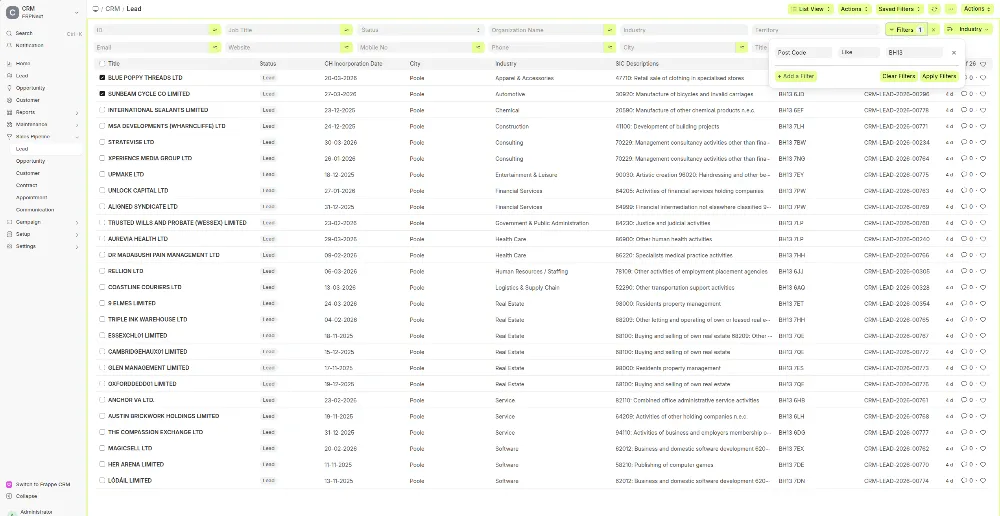
- The dispatcher filters and selects the specific records in the ERP system that need to be serviced by a particular driver on a given day.
- From the top menu, they select the “Actions” button, followed by “Create Route”.
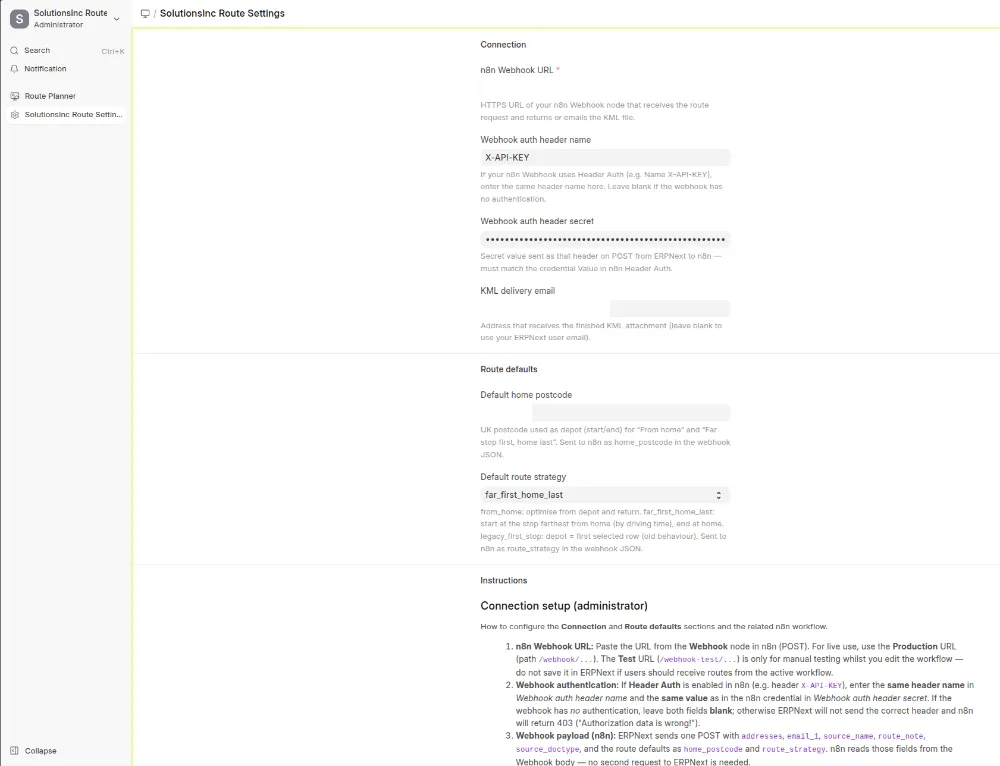
- Instantly, SolutionsERP transmits the data packet (GPS coordinates or addresses requiring geocoding) to your self-hosted OpenRouteService.
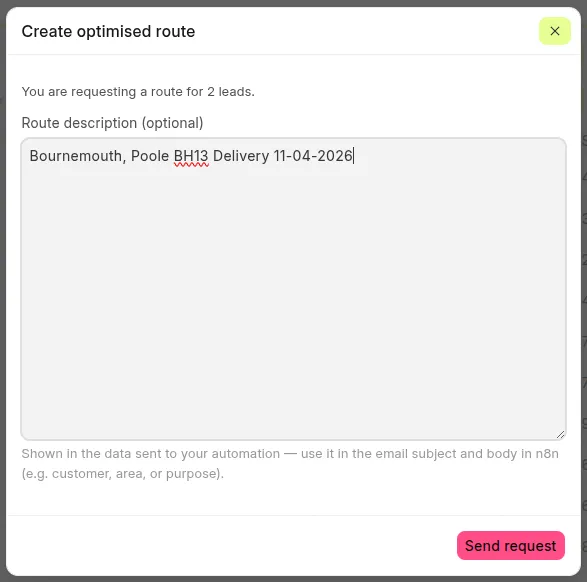
This is where the magic happens. Our system provides the dispatcher with highly flexible configuration options to dictate how the algorithm operates:
- The “Closest-to-Farthest” Strategy: The system structures the route so that upon leaving the base (e.g., the company headquarters or main warehouse), the driver services the nearest points first, progressively moving outwards to the most distant location. This is the ideal methodology if the driver finishes their shift in the field and travels straight home or to a hotel, rather than returning to base.
- The “Farthest-to-Closest” Strategy: In this scenario, delivery route optimisation immediately directs the driver to the most remote point on the map. They then execute subsequent drops whilst navigating their way back towards the starting base. This is the optimum approach when the fleet vehicle must be securely parked at the company depot at the end of the working day.
Calculations are performed asynchronously in the background. Once completed, SolutionsERP generates a file using the globally recognised KML (Keyhole Markup Language) standard. Rather than forcing your workforce to install heavily bloated, proprietary corporate applications, the KML file is automatically dispatched to the email address assigned to the driver.
KML: The Bulletproof Standard for Geolocation Data
The implementation of the KML format within the SolutionsERP architecture is a testament to our team’s engineering maturity. Originally created for Google Earth, KML is an XML-based format that is now an international standard governed by the Open Geospatial Consortium.
It is lightweight, human-readable, and contains highly precise data regarding waypoints, paths, and metadata. Delivering this file via email facilitates asynchronous workflows—a dispatcher can finalise routes late in the evening, and the driver simply opens the attachment on their smartphone the following morning. This brings us to the next critical component of our logistics ecosystem.
Organic Maps Navigation: The Ultimate Driver Companion
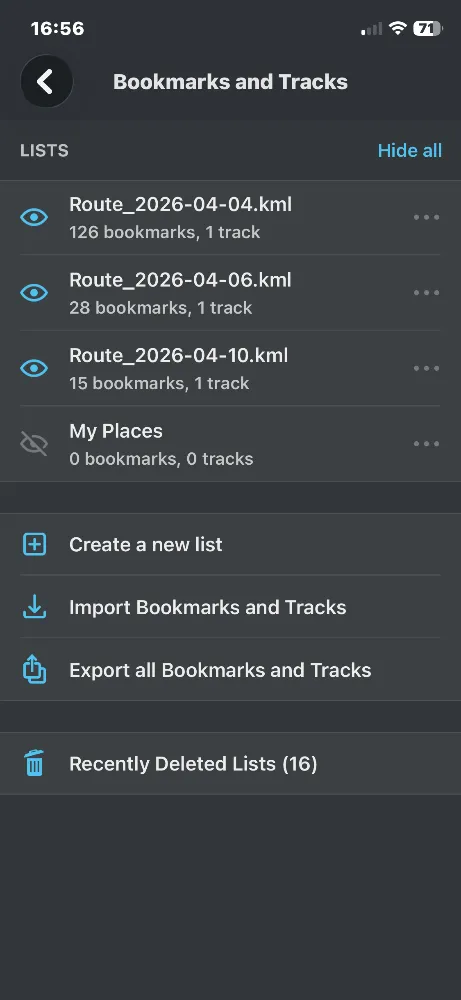
Receiving a route file is one thing; executing it flawlessly on the road is another. Upon opening the email on their smartphone, the driver taps the KML file, selects “Share”, and chooses Organic Maps navigation from the application list.
Why do we explicitly recommend Organic Maps navigation to our clients? It perfectly aligns with SolutionsInc‘s ethos of championing privacy-respecting, efficient, open-source technology. Organic Maps is a 100% free, open-source navigation application, entirely devoid of advertisements, trackers, and spyware, functioning on rich OpenStreetMap data.
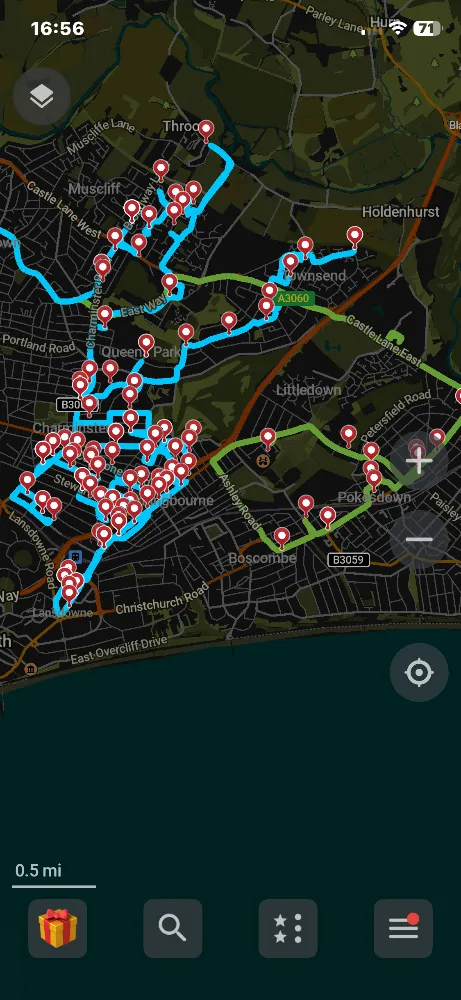
The benefits for drivers and logistics firms are truly colossal:
1. Multi-Route Handling and Colour Customisation
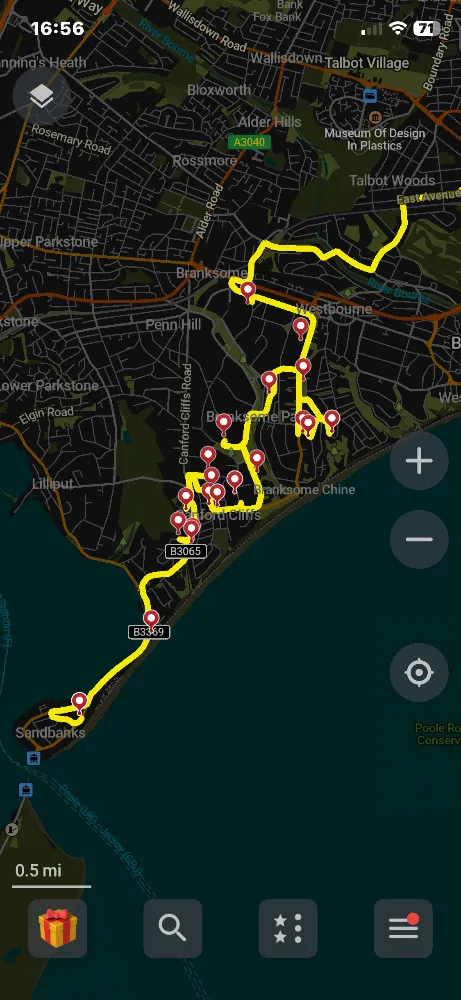
Organic Maps navigation excels at importing KML and KMZ files. Crucially, the application allows the driver to load several different routes simultaneously. They can assign distinct colours to each route; for example, setting “Morning Deliveries A” to blue and “Afternoon Deliveries B” to orange. This drastically enhances visual clarity on the device’s screen.
2. 100% Offline Functionality
Losing mobile signal in rural areas or deep inside concrete distribution centres is a common nightmare for delivery personnel. Because the entire delivery route optimisation has already been computed on your company’s server, and Organic Maps downloads regional maps directly to the phone’s storage, the navigation runs flawlessly even in aeroplane mode.
3. Dynamic Stop Management
The KML solution engineered by SolutionsERP permits highly flexible management of delivery “Stops”. When the driver arrives at an address, completes the handover, and secures a signature, they simply tap the specific stop on the Organic Maps interface and delete it from the map layer. The application immediately recalculates the remaining distance and ETA to the next designated waypoint. This ensures the delivery process remains fluid, and the map interface systematically “cleans itself” as the workday progresses, providing a great sense of momentum.
4. An Exceptionally Fast Interface
Technically speaking, this application is optimised to the absolute limit. It will not throttle the smartphone’s processor or drain the battery nearly as quickly as resource-heavy commercial alternatives. In the transport sector, device reliability and battery longevity are mission-critical parameters.
In-Car System Integration: Android Auto and Apple CarPlay
Modern enterprise technology must, above all, be safe. A driver constantly glancing down at a small smartphone screen mounted on an air vent is an outdated hazard. Our comprehensive integration fully accounts for the safety and comfort of your personnel.
Organic Maps navigation natively supports modern interface projection standards. If your fleet utilises vehicles equipped with modern infotainment systems, the driver can seamlessly leverage the large, built-in dashboard screen. Protocols like Android Auto and Apple CarPlay ensure that the imported KML route—generated minutes prior by SolutionsERP—is mirrored directly onto the vehicle’s primary monitor.
This goes far beyond mere convenience; it is vital for road safety. Large visual prompts, clearly delineated paths (in the driver’s chosen colours), and the elimination of the need to handle a mobile device whilst driving are invaluable benefits. After all, the ultimate goal of delivery route optimisation is ensuring your team returns safely to the depot.
Conclusion: How Open-Source Technology is Transforming Enterprise
The convergence of these three formidable pillars—our SolutionsERP management system (driven by ERPNext), the immense processing power of a self-hosted OpenRouteService and Vroom, and the brilliant end-user experience of Organic Maps navigation—creates the perfect logistics ecosystem.
This deployment shatters the myth that professional logistics requires paying exorbitant monthly cloud subscription fees to multinational tech conglomerates. Delivery route optimisation, as designed by SolutionsInc, is elegant from a software engineering perspective and ruthlessly effective from a business standpoint. Your company retains total ownership of its data, avoids variable API costs per vehicle dispatch, and empowers its workforce with offline-capable, ad-free tools that are fully compatible with modern automotive displays.
For enterprises looking to streamline operations, this is a textbook example of how to implement a self-hosted architecture and integrate it into a highly usable, business-facing product. We invite you to contact the SolutionsInc team today to discover how we can revolutionise your fleet management.
Leave a Reply to SolutionsERP Redefines Delivery Route Optimisation Cancel reply